Certified Mold Testing: Professional Inspection & Indoor Air Quality Assessment | Doctor Mold Pro
Certified Mold Testing: Comprehensive Guide to Professional Mold Inspection and Indoor Air Quality Assessment

Certified mold testing is the systematic process of collecting, analyzing, and interpreting environmental samples to determine the presence, concentration, and identity of fungal contaminants in buildings. This guide explains why certified mold testing matters for health, property value, and regulatory or insurance documentation, and it shows how certified assessors translate test results into remediation decisions. Readers will learn what testing commonly covers, which mold types are important to identify, the standard and advanced laboratory methods used (including ERMI testing and mycotoxin testing), and how test results guide post-remediation verification and clearance testing. The article maps a practical pathway from inspection through remediation and verification, with focused sections on sample methods (air sampling for mold, surface sampling mold, swab and bulk methods), typical cost drivers, and how to obtain estimates including free mold assessment quote options. Current research and industry guidance through 12/2024 inform interpretation and best practices so you can assess risk, compare quotes, and prioritize actions based on evidence rather than alarm.
What Is Certified Mold Testing and Why Is It Essential?
Certified mold testing is a standardized environmental testing process performed by trained assessors to identify fungal contamination and quantify airborne or surface spore levels. The mechanism relies on visually guided inspections, moisture mapping, and targeted sampling protocols followed by accredited laboratory analysis to produce reliable, defensible results that inform remediation scope and health-risk decisions. The primary benefit is that testing converts subjective observations into objective data—spore counts, species identification, and mycotoxin screening—so property owners, clinicians, and insurers can make evidence-based decisions. Certified testing also documents conditions for real-estate transactions and insurance claims, improving transparency and reducing later disputes. Understanding these fundamentals sets the stage for how professional inspectors secure accurate results and how indoor air quality mold tests differ from informal checks.
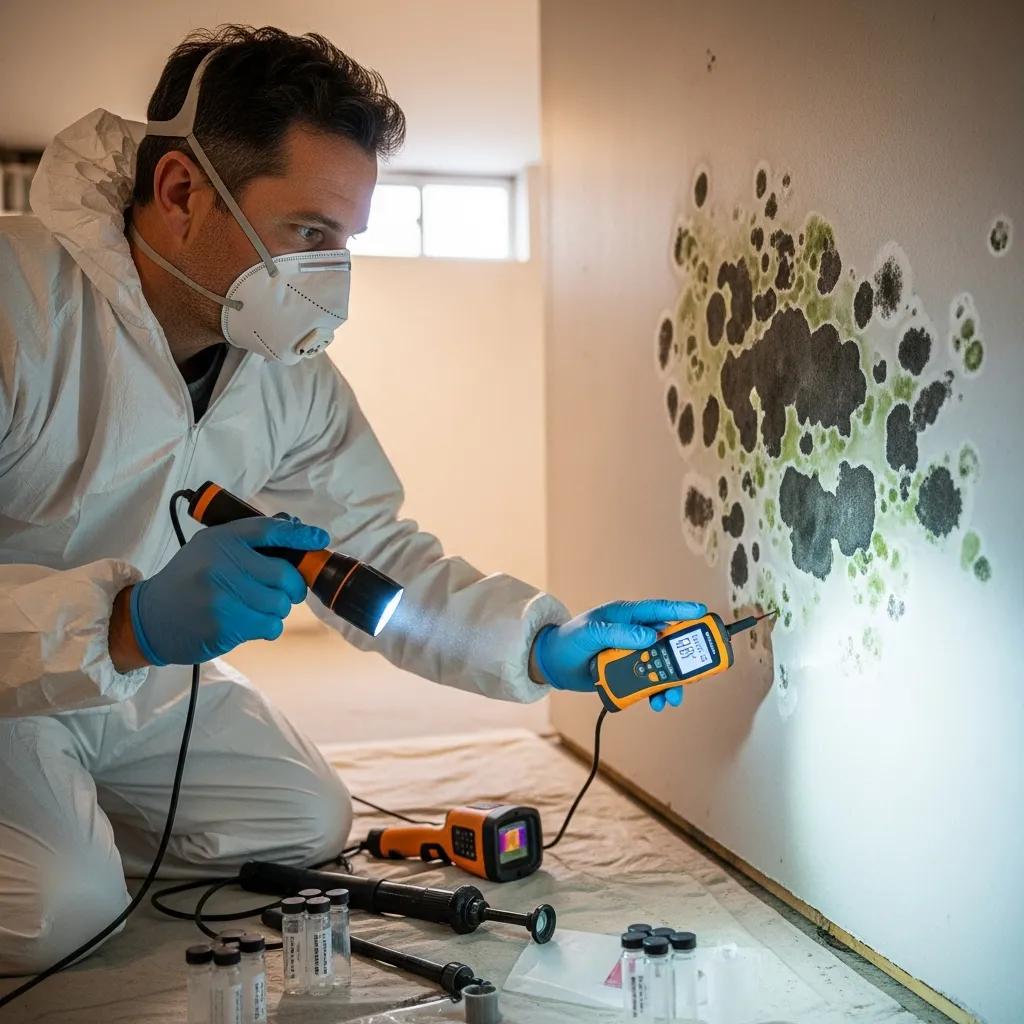
Professional inspections start with a systematic survey that links moisture intrusion and building conditions to likely mold reservoirs. Inspectors use tools such as moisture meters and infrared cameras to prioritize sampling locations, ensuring samples reflect suspected sources rather than random spots. This structured approach reduces false positives and creates the context labs need to interpret results, which is why chain-of-custody and accredited laboratory partnerships matter. Clear documentation then guides whether remediation is required immediately or if prevention and humidity control are sufficient. The next subsection explains how professional inspection procedures and instrumentation work together to ensure accurate, actionable findings.
How Does Professional Mold Inspection Ensure Accurate Results?
A professional mold inspection combines visual assessment, environmental measurements, and standardized sampling to produce accurate results that labs can interpret reliably. Inspectors document moisture intrusion points, HVAC pathways, and visible growth patterns, then select sampling methods—air sampling for mold when airborne exposure is suspected, surface sampling mold when settled spores are a concern, and bulk or swab sampling to confirm hidden contamination. Instruments such as calibrated air samplers, moisture meters, and infrared cameras reduce uncertainty by linking biological evidence to building physics. Samples are handled with a documented chain-of-custody and sent to accredited labs (for example, labs with AIHA EMLAP proficiency) to ensure method traceability and validated spore counts. This procedural rigor supports defensible mold inspection reports used for remediation planning and insurance documentation.
The attention to procedure also reduces interpretive error: before recommending remediation, assessors compare indoor and outdoor spore profiles and consider building context, preventing unnecessary invasive work. Accurate sampling therefore not only identifies problems but narrows the remediation scope, which reduces disruption and cost. That leads directly into the specific benefits of indoor air quality mold tests and how results are used for health and property decisions.
What Are the Benefits of Indoor Air Quality Mold Tests?

Indoor air quality mold tests quantify airborne fungal particles and identify species that influence exposure risk, allowing stakeholders to prioritize actions based on measured concentrations rather than assumptions. Typical outputs include spore counts, genus-level identifications (and species where relevant), and comparative indoor-outdoor profiles; advanced analyses may include ERMI testing or mycotoxin testing when indicated. These results help clinicians assess exposure-related symptoms, inform targeted remediation to remove active sources, and provide documentation for insurance or real-estate disclosures. For example, a high indoor Aspergillus count in a bedroom with water damage would shift remediation priorities to that area and warrant clearance testing after work is completed.
By translating biological evidence into clear recommendations, IAQ mold tests reduce unnecessary interventions and help confirm that remediation has restored safe conditions. The ability to quantify exposure also helps vulnerable occupants—such as immunocompromised individuals—make safe occupancy decisions while remediation is planned. The following section lists the common mold types tested and why species-level identification sometimes changes outcomes.
Which Types of Mold Are Commonly Tested and Why?
Certified testing typically targets common indoor genera—Aspergillus, Cladosporium, Penicillium, and Stachybotrys (often referred to as black mold)—because each has different implications for indoor air quality and occupant health. Identification provides both presence/absence data and context for risk assessment: some genera are ubiquitous and low-risk in small counts, while others, or high concentrations, indicate active colonization and increased exposure potential. Species-level ID matters when results could trigger specialized remediation, mycotoxin testing, or clinical follow-up. Testing for these types also helps focus moisture-control efforts, since different molds thrive under distinct moisture and substrate conditions. Understanding which molds matter prepares building owners to interpret lab findings and decide on appropriate next steps.
Lists of common indoor molds and their primary concerns provide a quick reference for interpretation and response.
- Aspergillus: Common indoors; some species can cause allergic or invasive disease in vulnerable people.
- Cladosporium: Frequently found on damp surfaces and textiles; typically allergenic but less often invasive.
- Penicillium: Grows on building materials; may indicate hidden water damage and elevated spore loads.
- Stachybotrys (black mold): Associated with wet cellulose-rich materials and sometimes mycotoxin production; requires laboratory confirmation.
These genera represent diagnostic categories rather than instant verdicts; species counts, context, and occupant sensitivity all determine response. The next subsection focuses on Stachybotrys specifically and appropriate identification methods.
What Is Black Mold and How Is It Identified?
Stachybotrys chartarum, commonly labeled "black mold," is characterized by dark colonies on cellulose-rich wet materials and a tendency to grow where moisture persists for extended periods. Visual appearance alone is not definitive because many dark-colored molds can look similar; therefore laboratory confirmation through culture, microscopy, or DNA-based PCR is necessary to verify Stachybotrys. Identification matters because some Stachybotrys strains are associated with secondary metabolites (mycotoxins) that can inform decisions about decontamination protocols and occupant health follow-up. However, the presence of Stachybotrys does not automatically imply poisoning; exposure risk depends on concentration, pattern of exposure, and occupant vulnerability.
Because Stachybotrys requires chronic wetting, its detection also signals unresolved moisture sources that must be addressed to prevent recurrence. Confirmatory testing therefore guides both the remediation method and long-term prevention strategy, which dovetails into how other genera like Aspergillus influence sampling and health assessments.
How Do Aspergillus and Other Mold Types Affect Indoor Air Quality?
Aspergillus and several other genera contribute to indoor air quality by releasing spores that can be inhaled, triggering allergic responses, asthma exacerbations, or, in rare cases, invasive disease for immunocompromised occupants. Symptoms commonly associated with elevated indoor mold levels include nasal congestion, coughing, eye irritation, and worsening asthma; clinical interpretation benefits from paired environmental data and medical evaluation. When Aspergillus is suspected because of clinical symptoms or visible colonization, targeted air sampling for mold and surface sampling mold are useful to quantify exposure and identify hotspots. Prevention focuses on moisture control, prompt drying of water-damaged materials, and ventilation—measures that reduce substrate suitability for these molds.
Interpreting species and spore counts in context therefore connects laboratory outputs with practical building remedies, which leads into a detailed review of available testing services and their relative strengths.
What Are the Main Mold Testing Services Offered by Certified Professionals?
Certified professionals offer a suite of services that combine survey, sampling, and laboratory analysis to answer specific questions about indoor fungal contamination. Core services include a visual inspection and moisture assessment, air sampling for mold to evaluate airborne exposure, surface and swab sampling to identify settled or colonizing organisms, and bulk sampling when building materials need lab confirmation. Advanced analyses—such as ERMI testing for building material DNA profiles and mycotoxin testing for certain secondary metabolites—are available when clinically or legally indicated. Each service has trade-offs in cost, turnaround time, and information provided, so choosing the right approach depends on the question being asked: presence vs. quantification vs. species-level ID. Below is a comparison table to help clarify typical sample types and when each is most appropriate.
| Sample Type | Collection Method | Cost Range | Typical Turnaround | Best Use Case |
|---|---|---|---|---|
| Air sampling | Volumetric air samplers (spore trap or impactor) | Moderate | 2–7 business days | Assess airborne exposure and indoor-outdoor comparison |
| Surface/swab sampling | Tape-lift or swab collection | Low | 2–5 business days | Confirm colonization on materials or furnishings |
| Bulk sampling | Material removal (small piece) | Moderate | 3–10 business days | Identify hidden growth within building substrates |
| ERMI testing | Dust collection and DNA analysis | Higher | 7–14 business days | Long-term profile of fungal DNA in carpets/ducts |
| Mycotoxin testing | Targeted chemical assays on dust or bulk | Higher | 7–21 business days | When clinical symptoms or specific toxin concerns arise |
This table clarifies how sample type, method, and lab workflow influence outcomes and costs. Choosing the appropriate service is the next critical decision, and the following subsections explain collection protocols and advanced methods in more detail.
How Are Air, Surface, Swab, and Bulk Samples Collected and Analyzed?
Collection begins with a documented plan: air sampling for mold uses calibrated volumetric samplers positioned in representative rooms and compared to outdoor background samples, while surface and swab sampling target suspected contaminated materials identified during the visual inspection. Technicians record conditions (temperature, relative humidity, sampler height) and follow chain-of-custody procedures to preserve sample integrity. Labs analyze samples using microscopy, culture, or molecular methods (PCR) depending on the requested service, and reports typically include raw counts, identification to genus or species, and interpretive commentary from the assessor. Turnaround varies by method but commonly ranges from 2 to 14 business days for standard services; expedited analysis is sometimes available at higher cost.
Research further explores the efficacy of various indoor sampling methods, including air and dust collection, when assessing fungal contamination using advanced techniques like qPCR.
Indoor Fungal Contamination Sampling & qPCR Analysis
Evaluating fungal contamination indoors is complicated because of the many different sampling methods utilized. In this study, fungal contamination was evaluated using five sampling methods and four matrices for results. The five sampling methods were a 48 hour indoor air sample collected with a Button™ inhalable aerosol sampler and four types of dust samples: a vacuumed floor dust sample, newly settled dust collected for four weeks onto two types of electrostatic dust cloths (EDCs) in trays, and a wipe sample of dust from above floor surfaces. The samples were obtained in the bedrooms of asthmatic children (n= 14). Quantitative polymerase chain reaction (qPCR) was used to analyze the dust and air samples for the 36
Comparison of indoor air sampling and dust collection methods for fungal exposure assessment using quantitative PCR, J Cox, 2017
Proper collection techniques and clear documentation are essential because the interpretive value of a mold inspection report depends on sample quality and context. The next subsection compares standard sampling with more advanced laboratory assays and when each is warranted.
What Are Advanced Mold Testing Methods Like ERMI and Mycotoxin Testing?
ERMI testing uses molecular DNA analysis of dust to generate a profile of multiple fungal taxa, producing a numeric score that can suggest long-term mold burdens in a building. ERMI testing is valuable when dust reservoirs or chronic exposure are suspected and when comparisons to reference datasets are informative. Mycotoxin testing detects specific secondary metabolites and is most useful when clinical findings suggest toxin exposure or when legal/insurance issues require chemical confirmation; however, mycotoxin presence in dust or materials does not alone prove health effects. PCR-based mold analysis and sequencing can provide greater specificity than microscopy but may cost more and detect dead spores or residual DNA, which requires careful interpretation.
Understanding the process of ERMI testing, including sample collection, is crucial for homeowners seeking to assess mold in their environment.
ERMI Testing for Home Mold Assessment
Collecting samples for ERMI testing doesn’t have to be daunting. With the right tools and a careful approach, you can gather the necessary data to assess the mold situation in your home.
Why ERMI Testing is a Must For Your Home
Advanced methods therefore offer deeper information but also demand careful contextualization by the certified mold assessor to avoid misinterpretation. Selecting an appropriate test balances diagnostic need, cost, and turnaround, which we explore further in the certifications and reporting section.
Further research highlights how advanced molecular profiling techniques, including qPCR, provide a more comprehensive understanding of fungal communities in moisture-damaged buildings, aiding in pre- and post-remediation assessments.
Advanced Fungal Profiling in Moisture-Damaged Buildings
Indoor microbial contamination due to excess moisture is an important contributor to human illness in both residential and occupational settings. However, the census of microorganisms in the indoor environment is limited by the use of selective, culture-based detection techniques. By using clone library sequencing of full-length internal transcribed spacer region combined with quantitative polymerase chain reaction (qPCR) for 69 fungal species or assay groups and cultivation, we have been able to generate a more comprehensive description of the total indoor mycoflora. Using this suite of methods, we assessed the impact of moisture damage on the fungal community composition of settled dust and building material samples (n = 8 and 16, correspondingly). Water-damaged buildings (n = 2) were examined pre- and post- remediation, and compared with undamaged reference buildings (n = 2).
Molecular profiling of fungal communities in moisture damaged buildings before and after remediation-a comparison of culture-dependent and culture-independent …, M Pitkäranta, 2011
Why Choose a Certified Mold Assessor for Your Mold Inspection Needs?
A certified mold assessor brings formal training, standardized procedures, and access to accredited laboratories, producing reliable results that stakeholders can trust for remediation planning, medical coordination, or insurance documentation. Certifications and accreditations indicate that assessors and their laboratory partners adhere to quality standards, use validated methods, and follow chain-of-custody and reporting best practices. A professional mold inspection report will include methodology, sample locations, raw lab data, interpretation, and specific remediation recommendations tied to the findings—making the report a practical tool rather than a vague statement of concern. Choosing a certified assessor reduces the risk of unnecessary remediation, enhances clearance validity, and supports transparent communication among contractors, occupants, and insurers.
Below is a table mapping common certifications and what each typically guarantees, so readers can understand practical differences when vetting assessors and labs.
| Credential / Accreditation | What It Guarantees | Practical Benefit |
|---|---|---|
| AIHA EMLAP (Lab Proficiency) | Participating lab proficiency in mold analyses | Greater confidence in spore counts and comparability |
| A2LA (Accreditation) | Laboratory competence for specific methods | Method traceability and recognized quality standard |
| IAQA or similar assessor certification | Assessor training and adherence to standards | Consistent inspection protocols and credible reports |
What Certifications and Accreditations Should a Mold Inspector Have?
Credible inspectors commonly partner with or use labs that participate in AIHA EMLAP proficiency testing and may reference A2LA or equivalent accreditations for their analytical methods; assessor certifications from recognized indoor air quality organizations indicate training in sampling protocols and report preparation. These credentials matter because they reduce methodological variability, improve chain-of-custody integrity, and provide third-party validation when results are contested in insurance or real-estate contexts. When engaging an assessor, ask about the lab used, whether proficiency testing is performed, and which specific methods will be applied. Verifying these elements helps ensure the mold inspection report will be actionable and accepted by other stakeholders.
Reliable credentials therefore increase the practical value of testing outcomes and inform the remediation protocols recommended after testing, which the next section explains in detail.
How Does a Certified Mold Assessor Prepare and Present Testing Reports?
A professional mold inspection report typically includes an executive summary, a detailed methodology section describing sampling methods and instruments, labeled sample results from the accredited lab, photographic documentation, interpretive commentary tying results to building conditions, and explicit recommendations for remediation and post-remediation verification. Reports often append raw lab certificates, chain-of-custody forms, and maps of sample locations to support transparency. Clear presentation enables contractors to scope work accurately and supports insurance or tenant communication. Requesting photos and lab accreditation documentation up front improves report utility and reduces follow-up clarification.
Well-structured reports therefore shorten the path from testing to remediation and streamline clearance verification, which is the focus of the next major section.
How Is Mold Remediation Linked to Certified Mold Testing?
Certified mold testing directly informs remediation scope, specifying which areas require removal, containment, or cleaning based on measured contamination and substrate type. Tests prioritize interventions by identifying active colonization versus historical or background levels, enabling targeted remediation steps such as localized removal, HEPA filtration, or structural repairs. Standard remediation protocols follow from the test findings and are tailored to the identified materials and levels of contamination; remediation without prior testing risks over- or under-treatment. After work is complete, post-remediation verification uses follow-up sampling to confirm that removal objectives have been met and that airborne spore levels are comparable to acceptable baselines. This testing → remediate → verify cycle ensures work addresses root causes and documents successful clearance.
For readers ready to move from testing results to repair planning, requesting a mold remediation estimate is a logical next step; many assessors and remediation contractors provide itemized scopes and can offer a mold remediation free estimate or a localized option when travel is limited. If you need pricing information, ask for a detailed remediation estimate that references the certified testing findings and outlines containment and disposal actions. The following subsection summarizes typical remediation protocols and when invasive work is necessary.
- Remediation commonly begins with containment to prevent cross-contamination.
- Removal of contaminated building materials follows, with HEPA filtration and negative pressure when needed.
- Moisture-source repair and prevention measures complete the remedy to prevent recurrence.
What Are Standard Mold Remediation Protocols Following Testing?

Standard remediation protocols begin with isolating the affected area using barriers and, when necessary, negative pressure to control airborne spore migration. Technicians remove contaminated porous materials (drywall, insulation, carpeting) when colonization is extensive, while salvageable non-porous materials may be cleaned with HEPA vacuuming and antimicrobial treatments. Personal protective equipment and HEPA filtration units reduce worker and occupant exposure during work, and all removed materials are handled according to waste-disposal requirements. Crucially, remediation includes identifying and repairing the moisture source—leaks, condensation, or poor drainage—because removal without addressing moisture will allow rapid recolonization.
These protocols are scaled to the severity and type of contamination identified in the testing phase, which informs the appropriate post-remediation verification approach described next.
How Does Post-Remediation Verification Confirm Mold Removal?
Post-remediation verification (clearance testing) combines visual inspection with follow-up air and/or surface sampling to confirm that remediation objectives have been met and that airborne spore levels have returned to acceptable baselines. Clearance criteria are context-dependent but commonly require indoor spore profiles to resemble outdoor background or meet site-specific targets established before remediation. Verification sampling should occur after the work is complete and the area has been cleaned and ventilated; results are interpreted in light of pre-remediation data to ensure improvement. Documentation from clearance testing provides the evidence needed for re-occupancy decisions and for insurance or transactional records.
Having clear verification data closes the testing-remediation loop and supports confidence that the intervention was successful. The next section examines cost drivers so owners can anticipate mold testing cost and the cost of mold inspection.
What Factors Influence the Cost of Certified Mold Testing Services?
Several variables determine mold testing cost, including the number and type of samples, property size and complexity, the laboratory methods selected (microscopy vs. PCR vs. ERMI or mycotoxin assays), and regional travel or scheduling logistics. Per-sample fees are common for air and surface sampling, while comprehensive inspections may be quoted as flat-rate packages that bundle visual assessment, sampling, and reporting. Choosing advanced methods like ERMI testing or mycotoxin testing raises the lab portion of the bill but can be justified when clinical or legal needs demand deeper evidence. Turnaround time requirements (standard vs. expedited) also affect price, as do complexity premiums for commercial buildings or properties with difficult access.
The table below shows typical cost drivers and how they influence final estimates to provide transparency when comparing quotes.
| Cost Factor | Impact on Price | Notes |
|---|---|---|
| Property size/complexity | High | Larger or multi-floor buildings require more sample locations and time |
| Number and type of samples | High | More air samples, ERMI, or mycotoxin analyses increase lab costs |
| Lab method selection | Moderate–High | PCR/ERMI/mycotoxin tests cost more than basic microscopy |
| Travel/region/time | Low–Moderate | Remote locations or urgent requests increase technician time fees |
Understanding these drivers helps property owners request comparable quotes and avoid surprises. The following subsections explain sample-level impacts on pricing and options for affordable assessments.
How Do Testing Types and Property Conditions Affect Pricing?
Sampling strategy strongly affects pricing: per-sample costs differ by method, with basic spore-trap air samples and surface swabs being relatively economical and DNA-based ERMI or mycotoxin tests commanding higher fees. Property conditions—such as multiple contamination zones, hidden cavities, or commercial HVAC complexity—require additional time and more samples, increasing technician visits and lab costs. In practice, a small condo may need a single-room air comparison and a few surface swabs, while a large commercial building will need systematic grid sampling and possibly HVAC duct testing. Choosing a pragmatic sampling plan aligned with the inspection goals minimizes unnecessary expense while delivering actionable results.
Careful scoping before testing therefore reduces the likelihood of surprise charges and supports clearer comparisons among assessors, which brings us to options for obtaining estimates and lower-cost alternatives.
Are There Affordable Mold Testing Options and Free Assessments?
Affordable testing options include targeted visual inspections with limited air sampling or focused surface swabs that answer a specific question—such as confirming active growth in a suspect room—at lower cost than comprehensive multi-room surveys or ERMI panels. Many assessors offer an initial visual consult or a free mold assessment quote to evaluate whether laboratory testing is necessary; these free estimates should outline what is included and any limitations. When seeking affordability, request itemized quotes that separate inspection time, sample collection, and lab fees so you can compare services on an apples-to-apples basis. Asking for a free mold assessment quote or a mold remediation free estimate near me can help identify local providers and obtain comparative pricing without committing to unnecessary tests.
Lower-cost approaches carry trade-offs in diagnostic depth, so weigh the cost savings against the value of definitive data for remediation and health decisions. If you need to proceed, the sample-report interpretation and documentation standards described earlier should be present in any credible estimate.
Requesting certified mold testing quotes and comparing estimates from local certified assessors enables informed decisions about which tests and remediation pathways best suit your property and budget. For next steps, consider scheduling a visual consult or requesting a free mold assessment quote to clarify scope and cost before committing to laboratory analyses.
